
The Bear Inherited
A small picture book companion to the IHT section. Eighteen short pages about a bear and a bakery and a father and the cubs at the till. Not analytical. Not advocacy. The bear is in the kitchen, on the Tuesday mornings, while the dough is rising — and at a wedding, on a Saturday in June, where the music started up.
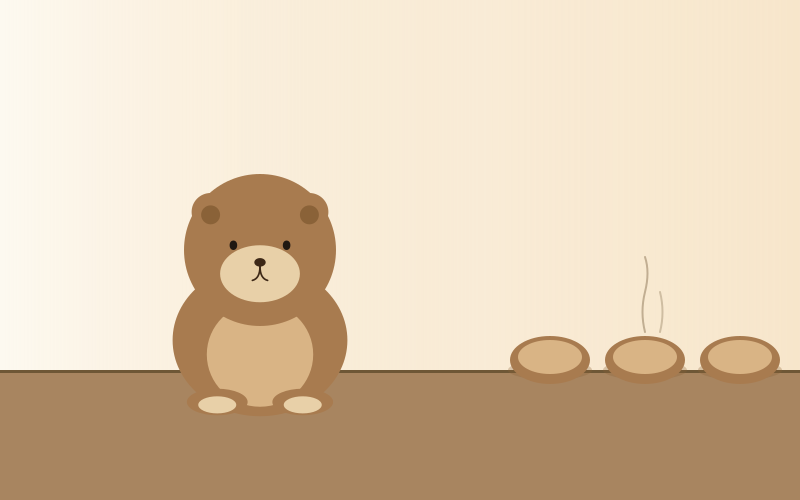

The bakery had been there since 1958.
The bear's grandfather had built it. The bear's father had run it. The cubs were learning the till.
This is a small book about an ordinary week in an ordinary bakery, in which the bear noticed the sun on the proving cabinet and the way the light moved across the floor in the afternoon.
ONE
The bakery had been there since 1958.
The bear's grandfather had built it after the war, on a small high street in a small town. The grandfather had not been clever. The grandfather had been steady. The bear thinks, sometimes, that the difference between clever and steady is mostly in who is alive at the end.
TWO
The bear's father had run the bakery for thirty-one years.
The bear had grown up in it. The smell of yeast, in the bear's memory, is the smell of being four years old, and small enough to stand under the counter, and to look up at a cube of butter the size of the bear's head.
THREE
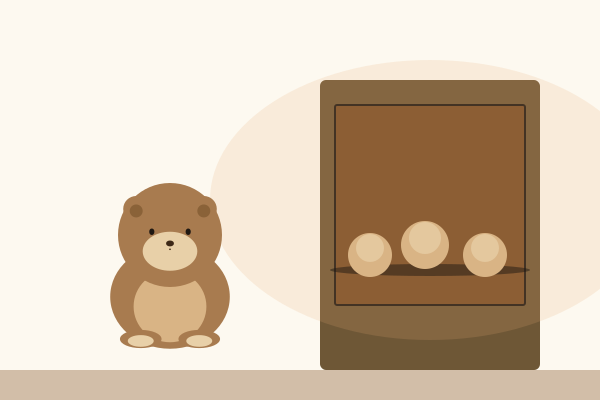
The bear loved the proving cabinet.
The proving cabinet was warm. Inside, the dough went on doing the thing the dough did, slowly, while the bear was doing other things. The bear is told, sometimes, that this is just chemistry. The bear is unsure. It is also chemistry. It is also more than that.
FOUR
The bear's father had spilled treacle on the floor in 1989. The corner is darker, slightly, than the rest of the floor. The bear has not asked for it to be cleaned.
FIVE
The bear loved the cubs at the till.
One of them, the small one, was on a stool to reach. The other, the older one, was teaching the small one how to count change. The bear loved the way the older one was patient. The bear loved the way the small one was nearly there, but not quite, and was not pretending. The cubs were learning the till.
SIX
The bear loved Tuesday mornings, before the bakery opened, when the bear and the bear's father were the only ones inside, and the radio was on quietly, and the dough was rising.
The bear's father did not say much, on Tuesday mornings. The bear did not say much, on Tuesday mornings. They did not need to. The bear thinks this may be the best of all the things.
SEVEN
The bear's father was tireder than he had said.
The bear had noticed. The bear had not said. The bear's father had not said. They had sat with it, both of them, the way bears sit with things, on the Tuesday mornings, while the dough was rising.
EIGHT
An accountant came one afternoon. The bear had liked the accountant.
The accountant had said the bakery was worth a number on one day, and a different number on a different day, and a third number on the day someone tried to sell it.
The bear nodded. The bear thinks this is true of most things. The bear is unsure how to think of the bakery as a number. The bear thinks of the bakery as the bakery.
NINE
A bear on the radio said the bear's bakery was a fortune.
The bear thought about the bear's bakery, the way a bear thinks about a thing the bear has stood inside, every morning, for thirty years.
The flour. The proving cabinet. The corner with the treacle. The cubs at the till.
It might be a fortune. The bear had never quite thought of it that way. The bear had thought of it as a bakery.
TEN
The bear's mother had died in 2003. The bear's father had not run the bakery on the Wednesday after, but had run it on the Thursday. The bear had not asked the father how. The bear had been small. The bear is sorry, now, that the bear had not asked.
ELEVEN
The bear loved closing the bakery on a winter afternoon.
The light came in low through the front window. The flour on the counters caught it. Everything was the colour of warm bread. The bear would lock the door, and turn the sign, and stand for a moment in the empty shop, and not be in any hurry to leave.
This was the bear's favourite minute of the day. The bear has not told anyone. The bear is telling you.
TWELVE
The cubs had asked, one evening, what would happen.
The bear had said: I do not know exactly what will happen.
The cubs had said: but you will know what to do.
The bear had said nothing for a moment. The bear had said: I will know what to do on the day I have to know what to do.
The cubs had nodded. The cubs had not seemed worried. The bear thinks the cubs were worried. The bear thinks the cubs were also kind.
THIRTEEN
The bear's father was, on a Wednesday in March, very nearly asleep at the till.
The bear had stood in the doorway and watched. The bear had not said anything. The bear's father had then, very slowly, lifted his head, and seen the bear, and given the small smile the father did, which was not really a smile, more an acknowledgement that another bear had arrived. They did not talk about the till, or the sleep, or the day. The bear made tea. The father drank it. The bakery stayed open until five.
FOURTEEN
The bear loved the part of the year when the days got longer.
By March the bakery would be open while it was still light, and the cubs would walk home in the afternoon without coats, and the bear would be in the back, kneading, and would notice that the kneading had gone on past five, and would think: it is alright to be here, longer, when the day is longer too.
FIFTEEN
The bear had not, the bear realised, ever asked the bear's father what the bakery was for.
The bear had assumed the bear knew.
The bear's father said, when the bear asked: so the cubs would have somewhere to go in the morning.
The bear nodded. They drank the tea. The dough was rising. They did not say anything else.
SIXTEEN
The bear went, on a Saturday in June, to a wedding.
It was the wedding of a younger bear, a niece, who the bear had known since the niece was very small. The niece had asked the bear to say a few words. The bear had said yes. The bear had then, for three weeks, not known what to say.
At the wedding, when the bear stood up, the bear said the things the bear had practised. The bear said something about how the niece had been a small cub once, with strawberry jam on the niece's face, and how the bear was glad to be at the wedding, and how the bear hoped the niece would have warm Tuesday mornings, and a fire to come back to, and a friend with a boat.
What the bear had not said, but had thought, while sitting back down, was that the bear's father was not at the wedding. The bear's father had been too tired to come. The bear thought about the bear's father, and the bakery, and the corner with the treacle, and the cubs, and the niece, and the bear had a feeling the bear could not name. The bear nodded at the niece's new partner, and the partner nodded back, and the music started up.
SEVENTEEN
The bear's father did not go on the Tuesday the bear had been preparing for.
This is what happens, mostly. The fathers do not go on the Tuesdays the bears prepare themselves for. The fathers go on the Wednesdays nobody had noticed, or on the Thursdays the bears had thought were going to be ordinary, or, sometimes, on the Mondays the bears had not even started.
The bear is grateful. The bear is also still waiting. The bear thinks both are alright. The bear is unsure whether either is going to be much help, on the day, when the day comes.
EIGHTEEN
The bear is sixty-three. The bear's father is eighty-eight. The cubs are learning the till.
The bear loves the bakery. The bear loves the proving cabinet. The bear loves the corner with the treacle, and the part of the year when the days get longer, and the cubs.
The bear loves the Tuesday mornings. The bear loves the unfinished sentence. The bear is making cheese and onion sandwiches.
White bread. Cheese, grated. Onion, chopped small.
The bear leaves it there.
A small companion to the IHT pieces on this site. The bear is not in the analytical pieces. The bear is in the bakery, on the Tuesday mornings, while the dough is rising. The pieces, if you want them, are here.