
The Bear Looked Up
A small picture book companion to the Building Mars section. Seven evenings in a small field on a small hill, plus one Wednesday afternoon in a small library while the rain wouldn't stop, and the rockets, sometimes, going past.
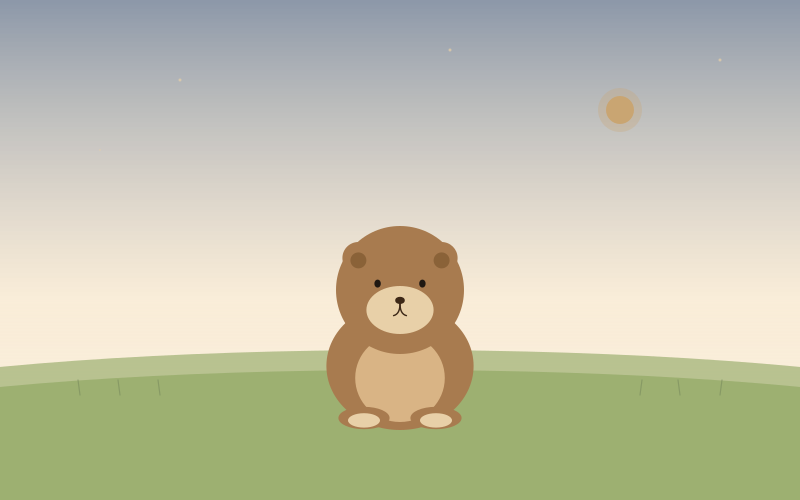

The bear had a field.
In the field, in the evenings, when the light was nearly gone, the bear could see the sky becoming the sky, and the planets coming up one by one, and the rockets, sometimes, going past.
This is a small book about seven evenings in the field, and what the bear noticed about the things that are very far away.
FIRST EVENING
The bear's field was on a small hill. The bear walked to it most evenings.
The bear did not do much in the field. The bear stood. The bear listened. The grass was sometimes wet and sometimes not. The bear had been told, by another bear who knew about grass, that this was how it was supposed to be.
The bear was in the field on a Tuesday in May, and a small red light went across the sky, very high up, very fast.
SECOND EVENING
The bear was told, by a younger bear at the post office, that the small red light was a rocket.
The rocket was going somewhere. The younger bear had told the bear where, and the bear had nodded, and the bear had not been sure the bear had heard correctly. The bear was not going to ask twice. The bear thought, on the way home, that perhaps the bear should have asked twice.
THIRD EVENING
The bear had not, the bear realised, looked up enough.
The bear had spent most of the bear's life looking forwards, or down, or at other bears. The bear was now sixty-eight. The bear is starting to look up.
This evening, the bear stood for an hour, and the sky changed, and the bear watched it change. There were a great many lights. The bear did not know which were planets, and which were stars, and which were the bear's own eyes inventing things, after a long day.
FOURTH EVENING
The bear loved the planets.
The bear could not name the planets. The bear had been small once, and had been told the names, but had forgotten, the way bears forget.
The bear thinks the planets do not mind being unnamed. The planets have been there a long time. They were there before the names. They will be there after.
A WEDNESDAY AFTERNOON
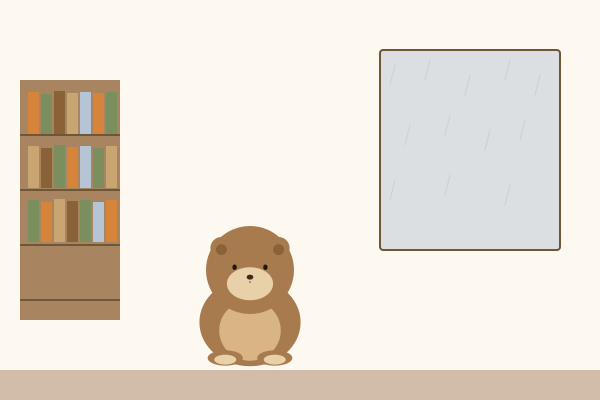
It rained, and would not stop, and the bear went into the small library in town to wait it out.
The library was warm. There was no one in it but the librarian, who was a quiet older bear, and a small cub at one of the tables, drawing.
The bear walked along the shelves and ended up, by accident, at the section about the sky. There were a great many books about the sky. The bear took one down. It was about a bear who, four hundred years ago, had looked through a glass tube and seen mountains on the moon. The bear who wrote the book had not known the bear who looked through the tube. The bear who looked through the tube had not known the bear who wrote the book. They were separated by four hundred years.
The bear thinks: most of the bears who write about the sky have never been up there. They have been here, in libraries, looking up, the way the bear looks up from the field. The bear is alright with this. The bear thinks it might be the only way it could ever have been.
The rain stopped. The bear put the book back. The bear went home.
FIFTH EVENING
A bear on the radio, in the kitchen, had been talking about going to one of the planets.
The bear had stopped to listen. The bear had then taken the radio out to the field, on the long wire, and turned it up, and listened from inside the field, while looking up at the planet they were talking about. The bear thinks this was the right way to listen.
The bears on the radio were arguing about whether to go. The bear could not see who was right. The bear could see the planet. The planet did not seem to know there was an argument.
SIXTH EVENING
The bear loved being in the field, looking up, while the bears on the radio argued about whether to go to the planet.
The bear thought: it is alright that the bears are arguing. The bears are right to be arguing. It is a big thing to go to a planet. It is a big thing to decide it. It is a big thing to be the bear who decides.
The bear was not sure who was the bear who decides. The bear had thought, perhaps, that everyone got to decide a little, and that this was how big things were decided. The bear is now less sure. The bear thinks one bear, somewhere, is mostly deciding. The bear is unsure how that bear was picked.
SEVENTH EVENING
The bear was in the field for the last evening of the week.
The bear had not, the bear noticed, talked to anyone all day. The bear had had cheese and onion sandwiches. The bear had walked to the post office and back. The bear had stood in the field and watched the sky.
The bear loved the field. The bear loved the cheese and onion sandwiches. The bear loved the planets, the unnamed ones, doing what planets do, while the bear stood in a small field on a small hill in a small country.
The bear thinks: most things being decided up there will be decided without the bear. The bear is alright with this, mostly. The bear would like to have been asked. The bear was not asked.
The bear is going to walk home, now, and have one more cheese and onion sandwich, and put the radio away, and go to bed.
The bear leaves it there.
A small companion to the Building Mars pieces on this site. The bear is not in the analytical pieces. The bear is in the field, on the small hill, with the radio on the long wire, looking up. The pieces, if you want them, are here.