
The Bear Read the News
A small picture book companion to the UK migration section. Fifteen short pages about a fortnight in which the bear took both the bear's paper and the neighbour's paper, the bear had soup with the neighbour, the bear got out at a small town the bear had never been to, and the bear noticed a few things the papers were not, mostly, writing about — a chair at the kitchen table that does not have a bear in it on most evenings, a fridge with postcards from Dubai and Singapore, and a neighbour's son who came home for a week and then went back.
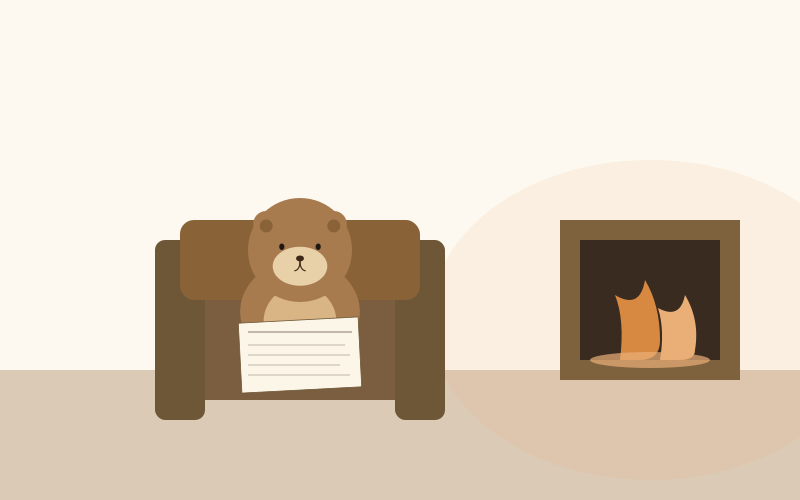

The bear had taken a paper, every evening, for forty years.
The bear's neighbour had taken a different paper, every evening, for forty years.
This is a small book about a fortnight in which the bear read both papers, and noticed that they were not, mostly, about the same thing.
MONDAY
The bear took the paper from the doormat.
The bear's paper had a picture of an angry bear on the front. The angry bear was angry about other bears who had come, the bear's paper said, from far away.
The bear's neighbour, on the way past, had given the bear the neighbour's paper. The neighbour's paper had a picture of an upset bear on the front. The upset bear was upset about a different thing.
The bear took both inside and made a cup of tea.
TUESDAY
The bear has lived on the bear's small street for thirty years.
The bear's street has, on the corner, a small shop that the bear loves. The shop is run by another bear, who came from somewhere else, twenty-two years ago. The bear who runs the shop knows the bear, and the bear's neighbours, and the cubs, and what the bear likes for breakfast.
The bear thinks of the shop as the shop. The bear thinks of the bear who runs it as the bear who runs the shop. The bear is unsure, from the papers, which of the two bears the papers are about.
WEDNESDAY
The bear was at the post office.
The bear was waiting in line. The bear was looking at the back of the head of the bear in front of the bear. The bear in front of the bear was, the bear noticed, also looking at the back of the head of the bear in front of that bear.
The bears in line had not asked each other where they were from. They had not needed to. They had needed a stamp.
THURSDAY
The bear's paper said something had been spent.
The bear could not read the number very clearly without the bear's glasses. The bear put the bear's glasses on. The number was very large.
The bear's paper said the number had been spent on a thing called accommodation. The bear thought about the bear's own accommodation, which is a small house, on the bear's small street, with a fire, and a neighbour, and a shop on the corner.
The bear thought: that is a lot of money for accommodation. The bear is unsure where the money went. The bear does not think it went into accommodation like the bear's accommodation. The bear hopes the bears in the accommodation are alright.
FRIDAY
The bear's neighbour had brought a soup over.
The neighbour's soup had been excellent. The bear had said so. The neighbour had said: my mother taught me. She came from a long way away. She did not speak much English when she got here. She made this soup most weeks.
The bear had asked: what is in it?
The neighbour had told the bear what was in it. The bear had not heard of half the things. The bear had loved the soup. The bear had eaten two bowls.
The bear has thought, since, about the soup. The bear thinks the soup did not, in itself, have an opinion on any of the things in the bear's paper. The soup was just the soup. The bear is grateful for the soup.
ON THE TRAIN
The bear had taken a train to visit a niece.
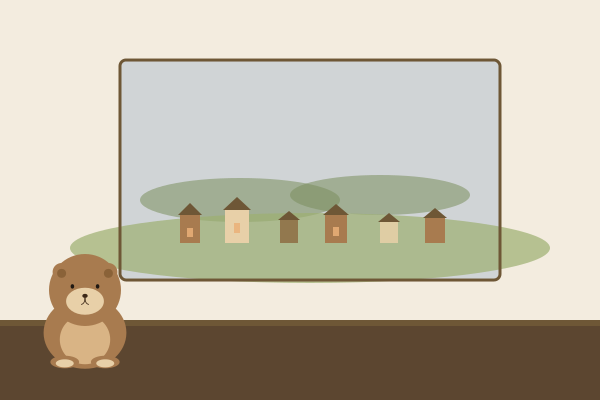
The train had stopped, halfway, in a town the bear had never been to. There were ten minutes before the train would go on. The bear got out, because the bear had had a long time on the train, and the bear's legs were stiff.
The town's small station had a single bench. There was a poster of the town from the 1950s on the wall. There was, on the platform, an older bear sweeping. The older bear nodded at the bear. The bear nodded back.
The bear walked to the end of the platform. The bear could see a little of the town from there. There was a small high street. There was a shop with the lights on. There was a bear pushing a pram. There was an older bear walking a dog. There were two bears who looked young, in school uniforms, sharing something out of a paper bag.
The bear had read about this town in the paper that morning. The paper had said the town was a particular kind of town. The bear thought, looking at it now, that the paper had told the bear something. But the town the bear was looking at was a town with a shop and a pram and an older bear walking a dog and two bears in school uniforms sharing something out of a paper bag.
The bear could not, the bear realised, fit the paper's town and this town in the bear's head at the same time. The bear got back on the train.
SATURDAY
The bear took the paper from the doormat.
The bear's paper had, again, a picture of an angry bear on the front. It was a different angry bear from Monday. The bear thinks they have a lot of angry bears.
The bear is a bear who has lived a long time, and the bear has noticed that, for as long as the bear has been reading papers, there has always been an angry bear on a front page somewhere. The angry bears change. The papers do not run out of them.
The bear thinks this is partly because there are always angry bears, and partly because the papers need angry bears, and that the two are connected, but the bear could not say in which direction.
SUNDAY
The bear had walked into town.
The town was busy. There were bears from many places. There were bears the bear had known for forty years, and bears the bear had never seen before, and bears who had come from far away, and bears whose grandfathers had come from far away, and bears whose great-great-grandfathers had been built into the wall of the town hall, the bear suspects, before any of the others had got there.
They were all walking around. They were buying things. The bear bought some bread.
MONDAY (TWO)
The bear's paper had a picture of a bear in a hotel.
The bear in the hotel had been there a long time. The bear in the hotel did not look angry. The bear in the hotel looked tired.
The bear thought: I do not know what to do with this picture. The bear's paper had told the bear what to do with the picture, but the bear was unsure if the bear's paper had asked the bear in the hotel.
The bear is unsure how to find out. The bear is, mostly, an old bear who reads papers in a small house. The bear has not been to the hotel. The bear does not know the bear's name.
TUESDAY (TWO)
The bear had had a long talk with the neighbour, after the soup.
The neighbour had said: you and I, we read different papers.
The bear had said: we do.
The neighbour had said: and yet we are friends.
The bear had said: we are.
The neighbour had said: I think this is because we live next to each other and not in the papers.
The bear had thought about this, after, while drying.
WEDNESDAY (TWO)
The bear did not, this evening, take a paper.
The bear sat in the chair by the fire. The neighbour came round. They had soup. The shop was still on the corner. The bear in the shop had said hello, that morning, when the bear had come in for breakfast bread. The bear in line at the post office, on Wednesday, had got their stamp.
The bear had not, the bear realised, sorted any of the things out. The bear is not sure the bear could. The bear is not sure the papers have, either, and they have been trying for forty years.
THURSDAY (TWO)
The bear was thinking, in the chair, about the bear in the hotel.
The bear thinks the bear in the hotel is a bear. The bear is mostly sure of this. The bear thinks the bear in the hotel would, if the bear in the hotel were here, like a cup of tea, and a sit by the fire, and someone to ask after the bear's name.
The bear is not, the bear realises, going to be the one to do this. The bear is sixty-eight, and the hotel is far away, and the bears in charge of these things are not the bear. The bear is sorry about this. The bear is not sure what to do.
The bear has, in the back of the bear's mind, a thought that the bear is going to think about over the next week. The bear thinks the thought is connected to the soup, and to the post office, and to the bear on the corner who runs the shop. The bear is unsure how. The bear thinks the bears running the country might also be unsure how. The bear is going to keep thinking.
FRIDAY (TWO)
The bear's son had moved to Australia, three years ago.
The bear had not been over. The flight was a long flight. The bear had thought, several times, about the flight, and had then thought about it the next morning, and had then put the kettle on instead.
The bear's son rang on Fridays. The bear had a small screen the bear's son had set up. The screen showed the bear's son, slightly slowed, slightly out of step with what the bear's son was saying. The bear loved the small screen. The bear loved the bear's son. The bear is sorry about the chair at the kitchen table that does not have a bear in it most evenings.
The bear thinks: the bear's son is well. The bear's son is happy. The bear's son is in a country with sun, and a job, and a house. The bear is glad. The bear is also sat by the chair, on Fridays, while the small screen is on, and the chair is empty, and the screen is not the same as the chair.
SATURDAY (TWO)
The bear's friend had postcards on the fridge.
The friend's grandcubs were in Dubai. There were postcards from Dubai, and from Singapore, and from a place the bear could not quite read the name of. The bear had asked who took the postcards. The friend had said: my grandcubs send them. They are doing well.
The friend had been quiet, for a moment. Then the friend had said: I have not been to any of these places. I do not know if I will go.
The bear had not said anything. The bear had put the kettle on. The friend had nodded.
The bear thinks about the postcards, sometimes. The bear thinks the postcards are a kind thing to send. The bear thinks the friend is proud and a little quiet about it, and that both are alright, and that there is no policy the bear knows of that would change either.
SUNDAY (TWO)
The neighbour's son had come home for a week.
The neighbour's son lived in Lisbon. The neighbour's son had a job, and a flat by the sea, and a partner the bear had not yet met. The bear and the neighbour had had the neighbour's son over for tea, on the Tuesday, and the bear had asked the neighbour's son about Lisbon, and the neighbour's son had said it was warm, and cheap, and the work was on a small screen anyway, and so it did not matter where the small screen was.
The bear had nodded. The bear had thought: this is not how it was, when the bear was the neighbour's son's age. The bear had not had a small screen, then. The bear had had a desk, in a building, in a city. The bear had stayed.
The week ended. The neighbour's son went back. The neighbour was alright. The neighbour made the bear soup, again, on the Saturday. The neighbour did not say much about the leaving. The bear did not ask.
The bear thinks: there are a great many neighbours' sons, all over, who come home for a week and then go back. The bear thinks the bears who write the papers are not, mostly, writing about this. The bear is not sure why. The bear thinks it is one of the things the country is doing, in the background, that the country is not yet talking about.
The bear leaves it there.
A small companion to the UK migration pieces on this site. The bear is not in the analytical pieces. The bear is in the small house, with the fire, and the neighbour, and the soup, and the paper. The pieces, if you want them, are here.